
Article by RAWMINA partners Joaquim Gispert and Diego Morillo from LEITAT Technological Center
The growing demand for critical raw materials such as cobalt (Co), antimony (Sb), germanium (Ge), and tungsten (W) is driving the need to find sustainable solutions for their recovery. Nanofibrous composite materials manufactured using the electrospinning technique have shown great potential in applications for the recovery of these elements. In addition, the integration of Metal-Organic Frameworks (MOFs) in nanofibers could lead to greater efficiency and selectivity in the extraction and recovery processes of these materials, essential for various industries, from electronics to renewable energy.
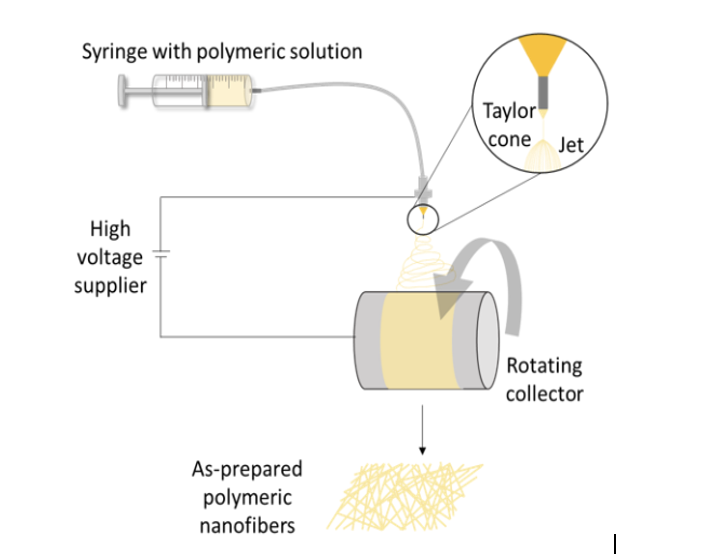
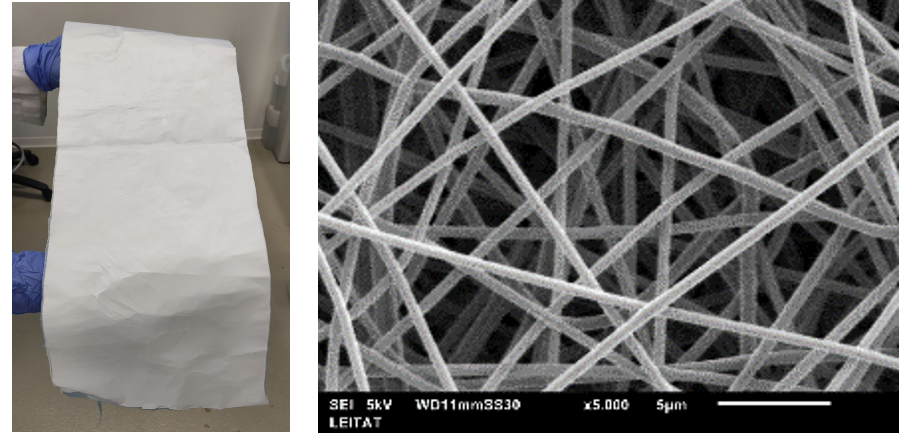
Electrospinning is a manufacturing process whereby nanofibers with a very fine and porous structure can be produced. The incorporation of MOFs into these nanofibers can be achieved during the electrospinning process, in which the MOFs are dispersed in the precursor solution that is used to form the fibers. This technique allows:
- High surface load: MOF-modified nanofibers provide a larger active surface area for metal adsorption.
- High selectivity: MOFs can be functionalized to selectively recognise and capture certain metals, improving the efficiency of the extraction process.
- High adsorption capacity: Nanofibers with MOFs can recover a large amount of target elements due to their porous structure.
The combination of nanofibers and MOFs has significant advantages in the recovery of critical raw materials:
- Better performance in terms of adsorption capacity: MOFs have a porous structure that, combined with nanofibers, increases the capture capacity of metals.
- Sustainability: Recovery processes based on these materials can reduce dependence on primary mining sources, favouring recycling and the use of secondary materials.
- Reduced costs: Implementing these materials in metal recovery processes could make production cheaper by optimising the extraction of valuable metals from e-waste or recycled materials.
Challenges and Future Prospects
Despite their promising prospects, there are challenges in the large-scale implementation of these materials. The stability of MOFs, their cost of production and the efficiency in the regeneration of materials after adsorption are key factors that need to be optimised. However, research continues to advance, and it is expected that in the near future, nanofibrous composite materials with MOFs will play a fundamental role in the transition to a more circular and sustainable economy.
Conclusion
The combination of nanofibers manufactured by electrospinning and Metal-Organic Frameworks (MOFs) represents one of the most promising solutions for the recovery of critical raw materials. The ability of these materials to selectively and efficiently adsorb and recover precious metals opens up new possibilities for recycling and sustainability in various industries. As research in this field progresses, we can expect a significant impact in reducing dependence on non-renewable resources.
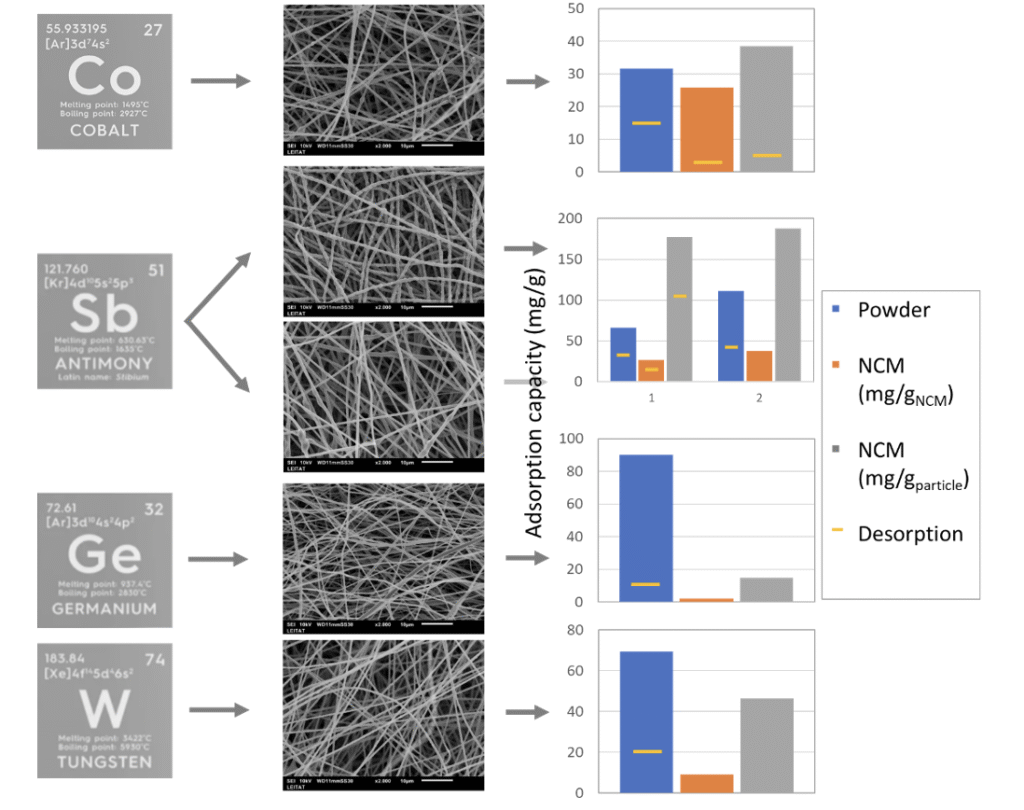
In the RAWMINA project, different nanofibrous composite materials have been developed for application in the recovery of antimony (Sb), tungsten (W) and germanium (Ge), showing good efficiency and high capacity to be regenerated (adsorption and desorption cycles).
The methodology has been the following:
- Identification and selection of potential materials for the nanofibrous composite materials (NCMs) development.
- Synthesis and characterization of different materials found as potential adsorbents for CRMs is described, as well as the results of stability, adsorption, selectivity, and desorption of these adsorbents
- Development and characterisation of NCMs based on modified polymer nanofibres with the best adsorbents.
- Evaluation and validation of the NCMs to select the best-performing materials for their upscaling and demonstration at both bench and pilot scale.
These materials and their application have been included in two patent applications: PCT/ES2024/070792: USE OF METAL-ORGANIC FRAMEWORKS FOR THE ADSORPTION OF GERMANIUM IONS IN AQUEOUS SOLUTIONS AND METHOD FOR THE ADSORPTION OF GERMANIUM IONS. December 18th 2024
and
PCT/ES2024/070791: USE OF METAL-ORGANIC FRAMEWORK PARTICLES (MOF) FOR THE ADSORPTION OF SB AND/OR W IONS AND METHOD FOR SUCH ADSORPTION. December 18th 2024.